Unlock Your Tokyo Adventure with Japanese Days of Week
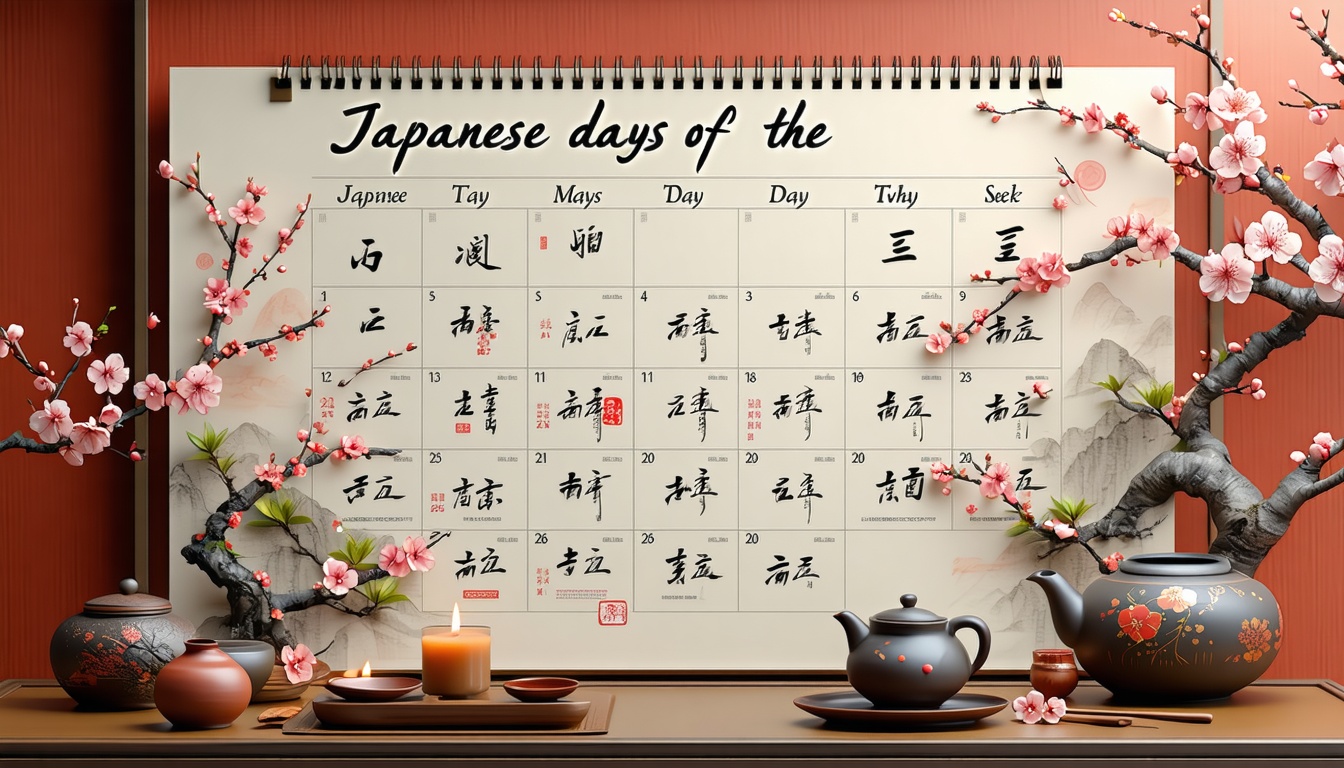
The Japanese days of week can seem tricky at first. But once you learn names like getsuyoubi and kinyoubi, you’ll breeze through schedules and chat with locals.
In this ultimate guide, we’ll walk through each weekday’s meaning and origin. You’ll learn how to pronounce and write them, ask what day it is, and read timetables at train stations and bus stops.
Explore Japanese weekdays
Names and meanings
Each Japanese weekday links to a celestial body or element. According to Preply (source), here’s a handy table of the seven days:
Day Kanji (Hiragana) Romaji Literal meaning
Monday 月曜日 (げつようび) getsuyoubi moon day
Tuesday 火曜日 (かようび) kayoubi fire day
Wednesday 水曜日 (すいようび) suiyoubi water day
Thursday 木曜日 (もくようび) mokuyoubi wood day
Friday 金曜日 (きんようび) kinyoubi gold day
Saturday 土曜日 (どようび) doyoubi earth day
Sunday 日曜日 (にちようび) nichiyoubi sun day
Seeing them side by side helps you spot patterns. Notice every kanji links back to nature or a planet.
Origin and astrology
The concept of a seven-day week reached Japan by the Heian period (around 1007 AD). A monk named Kobo Daishi helped introduce it, and it became the official calendar system during the Meiji era (SLJFAQ). Before that, lunar cycles ruled daily life.
This naming scheme comes from ancient Chinese astrology. Mercury was the “water star” (水星), Venus the “metal star” (金星), Mars the “fire star” (火星), Jupiter the “wood star” (木星), and Saturn the “earth star” (土星). The Japanese borrowed that system, swapping “star” (星) for “day” (曜日).
Cultural significance
Weekdays in Japanese culture carry subtle signals. For example, nichiyoubi (Sunday) honors the sun goddess Amaterasu in Shinto teachings. And kinyoubi (Friday), the “gold day,” often feels golden because it kicks off the weekend vibe.
Many businesses plan around weekdays and weekends. You’ll spot shops closed on “red” days (national holidays) and specific weekdays. Knowing the local rhythm makes your Tokyo trip smoother.
Pronounce and write days
Kanji, hiragana, romaji
Japanese day names appear in three scripts:
-
Kanji – characters like 月曜日
-
Hiragana – phonetic script, for example げつようび
-
Romaji – Latin letters, such as getsuyoubi
If you need a refresher on scripts, check out our katakana hiragana basics.
Pronunciation tips
Here are a few pointers to nail each name:
-
Break it down into syllables: get-su-yo-u-bi, ki-n-yo-u-bi
-
Keep each syllable even. Japanese isn’t stress-heavy like English
-
Say the vowel sounds clearly. Think get-soo-yo-bee
For deeper advice on sounds and pitch, dive into our japanese pronunciation guide.
Use weekdays in speech
Asking what day it is
Want to ask “What day is it today?” just say:
きょうは何曜日ですか?
Kyō wa nan-yōbi desu ka?
-
きょう (kyō) means “today”
-
何 (nan) comes from japanese question words and means “what”
-
曜日 (yōbi) is “day of the week”
Try it in a conversation: “すみません, きょうは何曜日ですか?” and you’ll get a friendly answer.
Responding with day names
When someone asks you back, answer like this:
きょうは月曜日です。
Kyō wa getsuyoubi desu.
Or talk about tomorrow:
あしたは水曜日です。
Ashita wa suiyōbi desu.
-
あした (ashita) is “tomorrow”
-
です (desu) adds politeness. Learn more at japanese politeness levels.
Everyday phrases
Once you’ve got the basics, spice up your chat with these:
-
“See you on Friday”
金曜日に会いましょう
Kinyōbi ni aimashō -
“I’m free Wednesday”
水曜日は空いています
Suiyōbi wa aiteimasu -
“Let’s meet Thursday”
木曜日に会おう
Mokuyōbi ni aō
These give you real-world practice. If you’re ordering dinner that night, pair this with our japanese restaurant phrases ordering.
Read transport schedules
Train and metro timetables
In Tokyo, timetables often split into three columns:
-
平日 (heijitsu) – weekdays
-
土曜 (doyōbi) – Saturday
-
日祝 (nichishuku) – Sundays and national holidays
That layout shows which trains run fastest or stop at every station. Keep an eye on the column headers so you catch the right train.
For more subway and bus words, swing by our japanese transportation vocabulary.
Platform announcements
Station speakers will mention schedule types, for example:
-
“次は、〇〇、〇〇” (Next stop, XX)
-
“この電車は平日ダイヤです” (This train follows the weekday timetable)
-
“土曜、日曜は各駅停車になります” (On Saturdays and Sundays, this train stops at every station)
When you hear 平日ダイヤ (heijitsu daiya) or 土曜ダイヤ (doyōbi daiya), you’ll know which pattern to expect. For side-by-side translations of common station calls, check japanese train announcements translation.
Bus and airport schedules
You’ll see the same grouping on bus timetables and airport shuttles. A quick glance at the headers helps you pick the right time. On some routes, holiday services (祝日 shukujitsu) follow the Sunday schedule, so look for 日祝.
Plan your Tokyo week
Scheduling visits
Planning to hit the museums? Many cultural sites close one weekday. For example, some museums shut on Monday or Tuesday. Use your new weekday terms when you ask staff, or simply say:
この美術館は何曜日に休みですか?
Kono bijutsukan wa nan-yōbi ni yasumi desu ka?
This tip goes well with our how to ask directions japanese.
Business hours and holidays
In Tokyo you’ll find shops and restaurants take a weekly rest day. Notice signs that say:
定休日: 水曜日
Teikyūbi: suiyōbi
That means the business is closed on Wednesday. Pair this knowledge with our basic japanese phrases tokyo travel to make reservations confidently.
Local events and festivals
Tokyo’s calendar is packed with matsuri (festivals). They often fall on specific weekdays, like every first Friday or third Sunday. To ask “When is the next festival?” in Japanese, you could say:
次の祭りは何曜日ですか?
Tsugi no matsuri wa nan-yōbi desu ka?
Knowing your weekdays helps you join the fun without missing a beat.
Practice with exercises
Matching game
Test your recall by matching English and Japanese day names. Draw lines or write the letter next to the number:
-
Monday
-
Tuesday
-
Wednesday
-
Thursday
-
Friday
-
Saturday
-
Sunday
A. doyoubi B. getsuyoubi C. kinyoubi D. kayoubi E. nichiyoubi F. suiyoubi G. mokuyoubi
Answers: 1-B, 2-D, 3-F, 4-G, 5-C, 6-A, 7-E
Fill in the blanks
Complete these sentences with the correct weekday:
今日は****です。 (Kyō wa **** desu.)
-
アルバイトは金曜日と土曜日にあります。
-
映画を見るのは木曜日にしましょう。
Answers:
-
月曜日 (getsuyoubi)
-
kinyoubi, doyoubi
-
mokuyoubi
Daily practice tips
-
Switch your phone calendar to Japanese weekdays
-
Say the day out loud each morning
-
Write your to-do list with dates and days in Japanese
-
Combine day names with numbers using our japanese numbers pronunciation and japanese time expressions
Frequently asked questions
Q1: How do I say “What day is today?” A: Use きょうは何曜日ですか? (Kyō wa nan-yōbi desu ka?)
Q2: What does yōbi mean in Japanese? A: 曜日 (yōbi) literally means “day of the week.”
Q3: Do Japanese calendars start with Sunday or Monday? A: In Japan Sunday (日曜日 nichiyoubi) is viewed as the first day of the week.
Q4: Can I abbreviate weekday names? A: Yes, in casual speech or on schedules you’ll see shortened forms like 月曜 (getsuyō) instead of 月曜日.
Q5: Is there a Japanese word for “weekend”? A: Yes, 週末 (shūmatsu) means “weekend.” Combine that with your weekday skills to plan a full weekend adventure.
Now you’re all set to talk about days like a local. Try using a new weekday phrase today and notice how it opens doors on your Tokyo trip!